LD-8 for Water Leak Survey

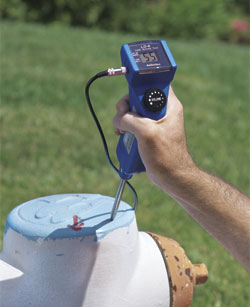
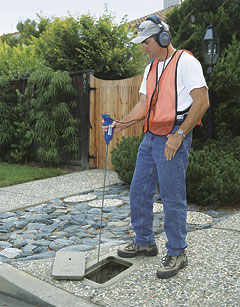
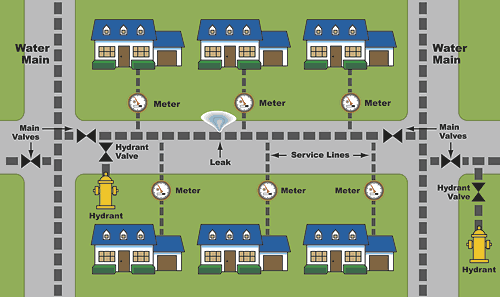
1. The sounds of leaks in pressurized water pipes can travel for hundreds (even thousands) of feet in every direction down the mains and services:

Small leak on cast cast-iron water main

2. Different pipe materials and different pipe diameters transmit leak sounds down their pipes very differently:

Distances leak sounds may travel(5 GPM leak at 60 PSI):

Pipe material & diameterTypical distance sound travels
Cast iron – 6 in1,000 – 1,200 ft
Cast iron – 12 in800–1,000 ft
Cast iron – 24 in600–800 ft
AC – 6 in800–1,000 ft
AC – 12 in700–900 ft
AC – 24 in400–600 ft
PVC – 6 in400–600 ft
PVC – 12 in200–300 ft
PVC – 24 in100–150 ft


3. The service line material is also very important when listening at meters or curb stops:

Distances leak sounds may travel(2 GPM leak at 60 PSI):


Service Line MaterialTypical distance sound travels
Copper Tubing600 – 1,000 ft
Galvanized Steel Pipe800–1,200 ft
“Poly” Plastic Tubing50–100 ft

4. The leak survey “strategy” must consider the pipe materials, pipe diameters, service line materials, and types of leaks expected.

If the distribution system experiences main breaks (5 to 10 gal/min or more) at certain times of the year and the mains are iron pipe or A/C pipe, then a “Hydrant Survey” can be effective and an efficient use of time. Listen at every hydrant in every block. If there is no hydrant for 500 ft., then choose a main valve.

If the distribution system has PVC mains and copper services, then an “Every Meter and Every Valve Survey” may be necessary. Particularly if the system experiences small leaks at the corp valves (taps into mains).

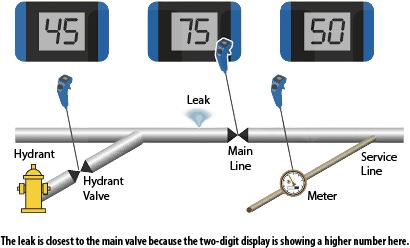
5. If you hear a leak, listen at the adjacent service lines, hydrants, and valves. If the sound is louder, then you are closer. If you cannot tell which one is louder with your ears, then study the two-digit display: