LD-20 or LD-12 for Pinpointing Leaks

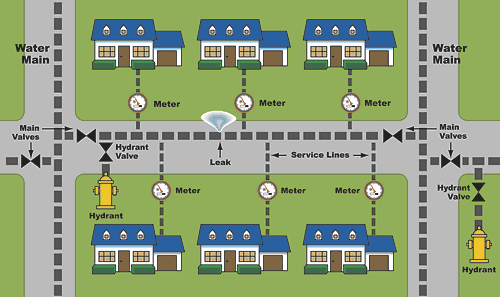
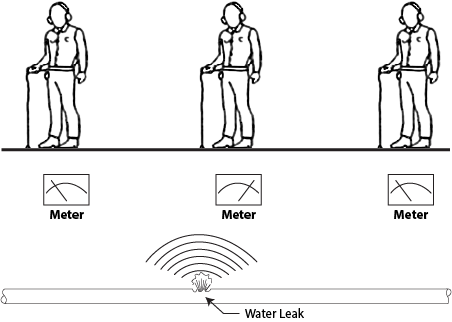
1. The sounds of leaks in pressurized water pipes can travel for hundreds (even thousands) of feet in every direction down the mains and services. If there is no evidence of the leak, then compare the loudness of the leak sounds at the meters, valves, and hydrants:

Small leak on cast cast-iron water main

When you have found the two meters, valves, or hydrants with the loudest leak sounds, you are ready to begin the final “pinpointing”. First, mark the exact location of the pipe between the two loudest valves, meters, hydrants, etc. with a pipe locator. Then listen every 2-3 feet directly over the pipe.

2. Listen directly over the pipe between these two loudest locations. Use your hearing and the meter to determine exactly where the leak sound is loudest:

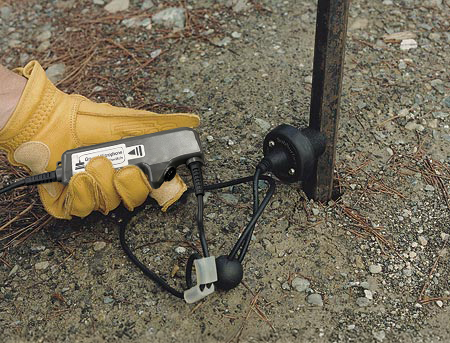
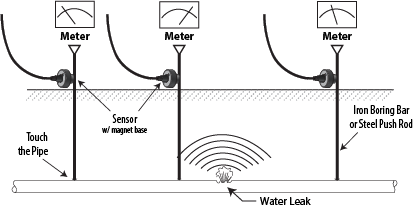
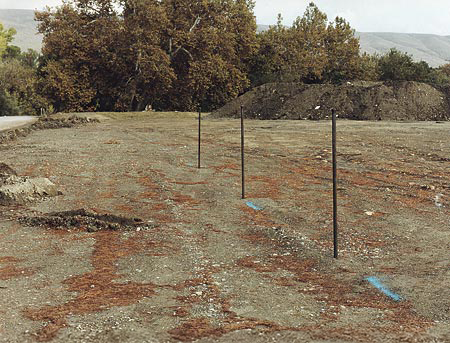
3. If the pipe is under soft ground or loose fill and if it is not too deep (only 3-5 feet), then using boring bars or push rods may be effective. Touch the pipe if possible, but if the pipe is deep or the soil is rocky, try to get the bars in firmly at least 2-3 ft deep.

4. With the boring bars (or push rods) touching the pipe at 2 or 3 locations, compare the loudness of the leak:

If one bar is louder, then it is closer to the leak. Move the other bars closer to the loudest bar and listen again. Keep moving the bars until they are only 5-10 ft apart and center bar is loudest. Dig.

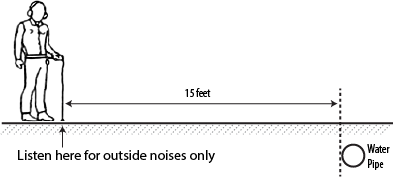
5. The Low and High Filters are used to filter out outside noises of wind, traffic, A/C hum, etc. If you encounter these interference, try the 200 Hz filter or 400 Hz filter while listening on the same surface but 15 feet away from the water lines:

If the filter removes the outside noise, then listen over the pipe again and re-adjust the Volume